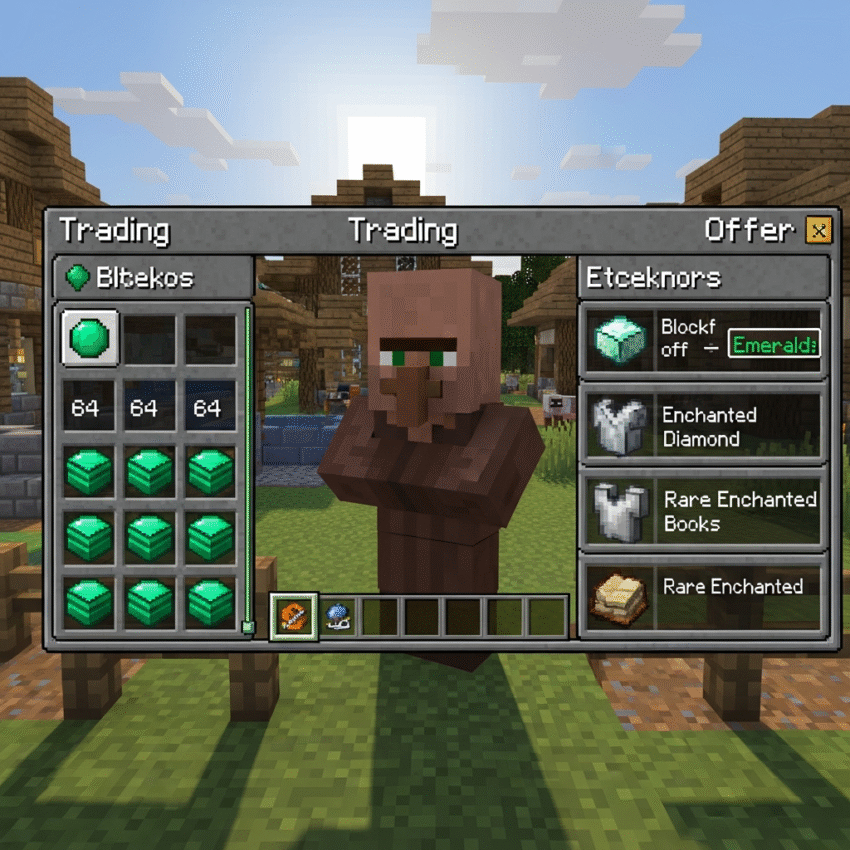
Minecraft villager trades are one of the most exciting features in the game, and learning how to use them can make your Minecraft world much more fun and rewarding. Minecraft villager trades allow players to exchange items like emeralds, food, and tools with villagers. Each villager has a job, and their job decides what they will trade. For example, a farmer villager can trade crops, while a librarian can trade books and enchanted items. Knowing the right trades can save you a lot of time and resources. Players can even improve their trading experience by increasing a villager’s level, unlocking better deals as they go. Some trades are rare and can give you unique items that are hard to find anywhere else. Mastering villager trades helps you build better gear, collect rare resources, and even expand your village quickly.
Understanding Minecraft villager trades goes beyond just giving items to villagers. Each villager has different levels like novice, apprentice, journeyman, expert, and master, and higher levels unlock stronger trades. You can level up a villager by trading with them, which is very helpful if you want rare items like enchanted books or diamond tools. Some villagers even restock their trades after a while, so you can trade multiple times to get the items you want. Villagers also need their own workplaces to unlock trades, like a fletcher using a fletching table or a blacksmith using a smithing table. Protecting your villagers is important too, because zombies and raids can harm them and stop your trades. With the right strategy, Minecraft villager trades can save resources, give you unique items, and make your gameplay much more fun.

Minecraft Villager Trades: Complete Guide for Players
Minecraft villager trades are an important part of the game. They help you get resources, tools, and rare items without mining or crafting everything yourself. If you want to grow your village, get better gear, or just have fun trading, learning villager trades is very useful. In this guide, we will explain everything about Minecraft villager trades, including villager types, levels, best trades, and tips to make trading easy and safe.
Minecraft villager trades let players exchange items with villagers using emeralds or other resources. Each villager has a job, and their job decides what they trade. For example, farmers trade crops, librarians trade books, and blacksmiths trade tools. Villagers can level up from novice to master, unlocking new and better trades as they gain experience. Trading with villagers can give you rare items, enchanted books, or even diamond tools. Protecting your villagers is important because zombies and raids can stop your trading benefits. By learning villager trades carefully, you can save time, get useful items, and make your Minecraft world more exciting.
What Are Minecraft Villager Trades and How Do They Work
Minecraft villager trades are a system where players exchange items with villagers to get resources they need. Villagers have jobs that determine what items they trade. Each trade uses emeralds as the main currency, but sometimes other items like crops or tools are needed. When you trade with a villager, they gain experience, and after enough trades, they level up, unlocking new trades.
To trade with villagers, approach them and right-click (or tap on mobile). You will see a trade menu with the items they offer. Trades can be common, like exchanging wheat for emeralds, or rare, like enchanted books. Some villagers also restock their trades twice a day, giving you multiple chances to get the items you want. Villager trading is one of the best ways to get rare items without spending hours mining or exploring.
Different Types of Villager Jobs for Trading
Each villager has a job that decides the items they trade. Here are the main villager jobs and examples of their trades:
- Farmer: Trades crops like wheat, carrots, potatoes, and pumpkins. They can also give emeralds for food items.
- Librarian: Trades books, enchanted books, and paper. Great for getting special enchantments.
- Armorer: Trades armor and sometimes iron, giving you better protection for less effort.
- Toolsmith: Trades tools like pickaxes, axes, and shovels. Can give enchanted tools at higher levels.
- Fletcher: Trades bows, arrows, and sometimes crossbows.
- Cleric: Trades magical items like bottles of enchanting, ender pearls, and redstone.
Knowing which villager to trade with is key. Some trades are better for beginners, while others are more valuable as you progress.
Novice to Master: How Villager Levels Affect Trades
Villagers have levels that affect what trades they offer:
- Novice: Basic trades. Usually simple items like crops or paper.
- Apprentice: Better trades like iron tools or armor.
- Journeyman: Rare trades like enchanted books or crossbows.
- Expert: High-level trades, including diamond items and enchanted gear.
- Master: The best trades. Villagers may offer rare or highly enchanted items.
You can level up a villager by trading with them. Every trade gives them experience, which increases their level. Higher levels unlock stronger and more valuable trades.
Best Minecraft Villager Trades for Beginners
If you are new to Minecraft, some trades are very helpful:
- Farmer trades: Wheat, potatoes, and carrots for emeralds. Easy and cheap.
- Librarian trades: Books for emeralds. Can get enchanted books like Unbreaking or Sharpness early.
- Toolsmith trades: Stone or iron tools for emeralds. Good for early-game equipment.
Trading with villagers helps you save resources and time. Start with common trades, then work your way up to rare and valuable items.
Rare and Valuable Villager Trades You Should Know
Some villager trades are rare and can give you big advantages:
- Enchanted books: Librarians can give books like Mending or Fortune, which are hard to find elsewhere.
- Diamond tools and armor: Toolsmiths and armorers at higher levels can give enchanted diamond gear.
- Emerald for rare items: Clerics sometimes trade items like ender pearls, glowstone, or redstone, which are hard to find.
Finding these trades can save hours of mining and help you get powerful equipment quickly.
How to Level Up Villagers Fast for Better Trades
To unlock better trades, villagers need to level up. Here’s how you can do it quickly:
- Trade frequently: Every trade gives villagers experience. Trade as much as possible.
- Provide jobs: Make sure villagers have their workplace blocks, like fletching tables or lecterns. Without a job block, they cannot unlock trades.
- Protect your villagers: Zombies or raids can harm villagers, stopping your trading progress. Build walls or fences around your village.
By following these steps, you can get your villagers to master level faster and unlock rare trades.
Tips to Protect Your Villagers While Trading
Villagers are valuable, and you need to keep them safe:
- Build fences or walls around your village to prevent zombie attacks.
- Light up the village to stop monsters from spawning at night.
- Keep iron golems nearby; they protect villagers automatically.
- Avoid letting villagers wander too far from their job blocks.
Safe villagers mean uninterrupted trades and faster progress in the game.
Using Minecraft Villager Trades to Get Enchanted Items
Enchanted items are some of the best things you can get in Minecraft. Librarians are the best for enchanted books, and higher-level trades can give you books with Mending, Sharpness, or Efficiency. Combine these books with your gear using an anvil to create powerful weapons, tools, and armor. Villager trades can also save you from spending experience points on enchantments by giving you ready-to-use enchanted books.
Trading Strategy: How to Get Maximum Benefits from Villagers
To get the best items from villagers, follow a strategy:
- Focus on villagers that give the items you need most.
- Level up villagers step by step, starting with common trades.
- Stock up on emeralds early by trading simple items with farmers.
- Always protect your villagers from damage to avoid losing valuable trades.
- Explore villages to find rare villagers with better trades.
A good strategy ensures that you get strong gear, rare items, and enchanted books efficiently.
Common Mistakes to Avoid When Trading with Villagers
Even experienced players make mistakes with villager trades:
- Ignoring villager levels: Only trading with novice villagers can limit your progress.
- Not protecting villagers: Villagers can die from zombies or raids, stopping trades.
- Wasting emeralds: Some trades are not worth it, so choose carefully.
- Forgetting job blocks: Villagers without job blocks cannot unlock new trades.
Avoiding these mistakes saves time, resources, and frustration.
Conclusion
Minecraft villager trades are one of the most useful systems in the game. They help you get rare items, enchanted books, and better tools without spending hours mining. By understanding villager jobs, levels, and best trades, you can make trading easy, safe, and rewarding. Protect your villagers, trade smartly, and focus on leveling them up to master the trading system.
FAQs
Q1: How do I unlock better trades with villagers?
A1: Trade with them frequently and make sure they have their job blocks. Every trade gives them experience, leveling them up.
Q2: Which villager trades are best for beginners?
A2: Farmer trades for crops, librarian trades for books, and toolsmith trades for basic tools are best for beginners.
Q3: Can villagers restock their trades?
A3: Yes, villagers restock their trades twice a day if they have access to their job block.
Q4: How can I protect villagers from zombies?
A4: Build fences or walls, light up your village, and keep iron golems nearby for protection.
Q5: What are the rarest villager trades?
A5: Rare trades include enchanted books like Mending, diamond tools or armor, and magical items from clerics like ender pearls.